
TL;DROpenfort now supports gasless transactions on Solana, so users never need to hold SOL to transact. Under the hood, a co-signing pattern with the Kora relayer lets your app pay network fees on behalf of users while preserving signer security. This removes a major onboarding blocker for consumer apps, games, and payment flows on Solana. Integration is a few lines of code via the Openfort SDK — no custom relayer infra required. The post walks through setup, the signing flow, and production considerations.
Openfort now supports gasless transactions on Solana, so users never need to hold SOL to transact. Under the hood, a co-signing pattern with the Kora relayer lets your app pay network fees on behalf of users while preserving signer security. This removes a major onboarding blocker for consumer apps, games, and payment flows on Solana. Integration is a few lines of code via the Openfort SDK — no custom relayer infra required. The post walks through setup, the signing flow, and production considerations.
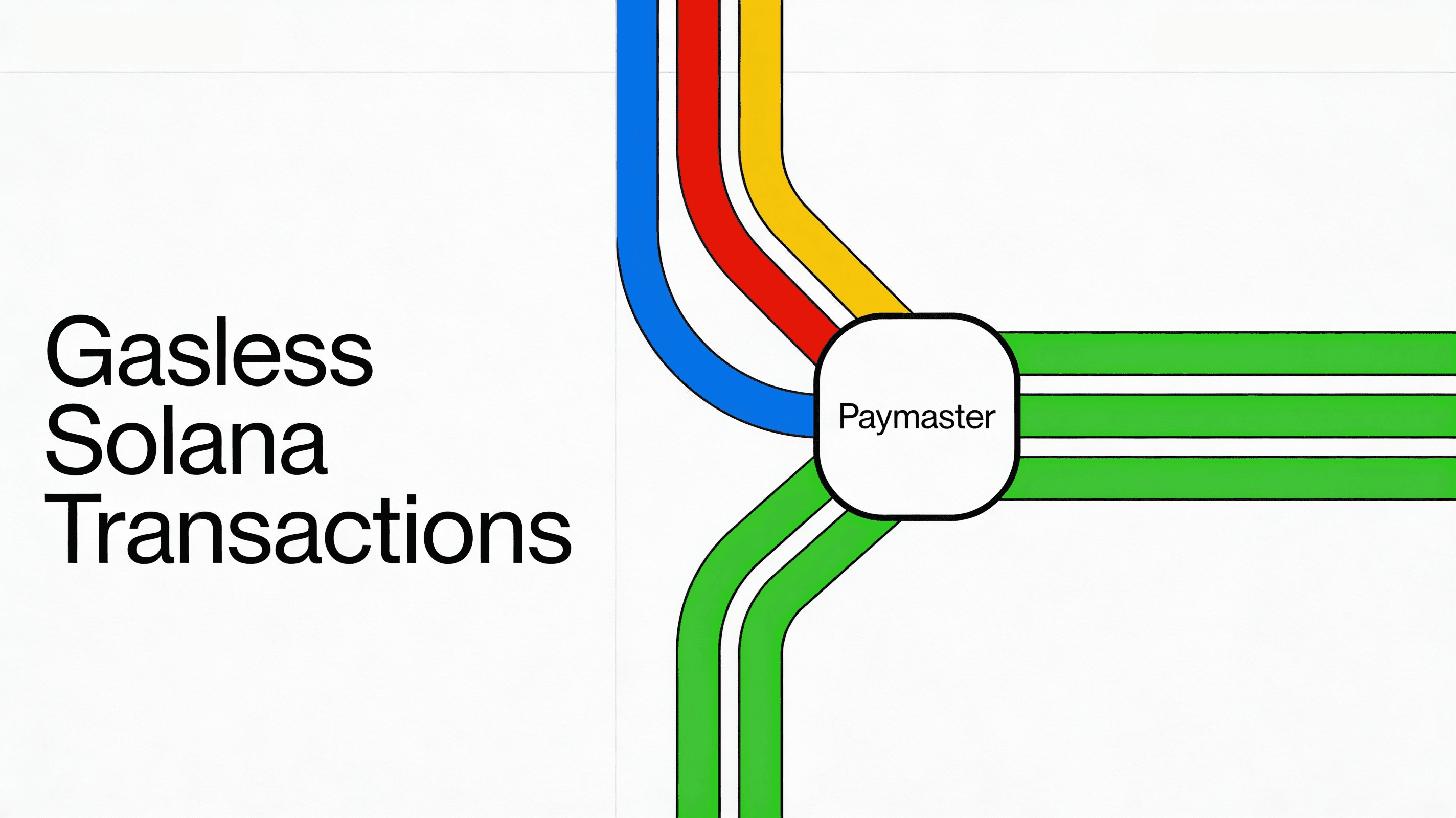
When we announced Solana support, we promised sponsored transactions were coming. Today, we're delivering on that promise: Openfort now supports gasless transactions on Solana.
This feature lets your users transact on Solana without holding any SOL for network fees. You sponsor the gas, they focus on your product.
How it works
The technical implementation uses a co-signing pattern with the Kora relayer:
- Your app constructs a transaction with Kora as the fee payer
- The user signs the transaction payload through their Openfort embedded wallet
- Kora co-signs and broadcasts the transaction to the Solana network
The user's wallet only signs the transaction data—no SOL is deducted from their account. The relayer handles the fee payment on your behalf.This approach maintains the security guarantees of cryptographic signing while completely removing the gas fee barrier for your users.
Frictionless wallet creation
Gasless transactions pair with Openfort's embedded wallet infrastructure on Solana. Users can create self-custodial wallets through familiar login methods—email, social auth, or SMS—without needing to understand blockchain mechanics upfront.
Combined with gasless transactions, this means:
- No seed phrase education required during onboarding
- No "buy SOL first" step before users can interact
- Standard web2 login flows with crypto capabilities
Your users start using your product immediately. The blockchain infrastructure becomes invisible.
Why this matters
Gas fees remain one of the biggest friction points in crypto applications. On Solana, fees are already low—but "low" isn't zero. Users still need to acquire SOL, transfer it to the right wallet, and maintain a balance. Each step is a potential drop-off point.
Gasless transactions eliminate this friction entirely. Your application handles gas costs as a business expense, similar to paying for API calls or cloud infrastructure.
For stablecoin flows, DeFi savings, trading, or any consumer application, this changes the onboarding equation. Users don't need to become crypto-literate before experiencing your product.
Get started
We've published a complete recipe for implementing gasless transactions on Solana:
The guide covers client setup, transaction construction, signing flow, and integration with Openfort's embedded wallets.
If you're already using Openfort on Solana, upgrading to gasless transactions requires minimal changes to your existing integration.
Related reading
- Announcing Openfort for Solana — our initial Solana launch and roadmap
- Embedded wallets explained — understand how Openfort's wallet infrastructure works
- Backend wallets — server-side wallet management for automated operations